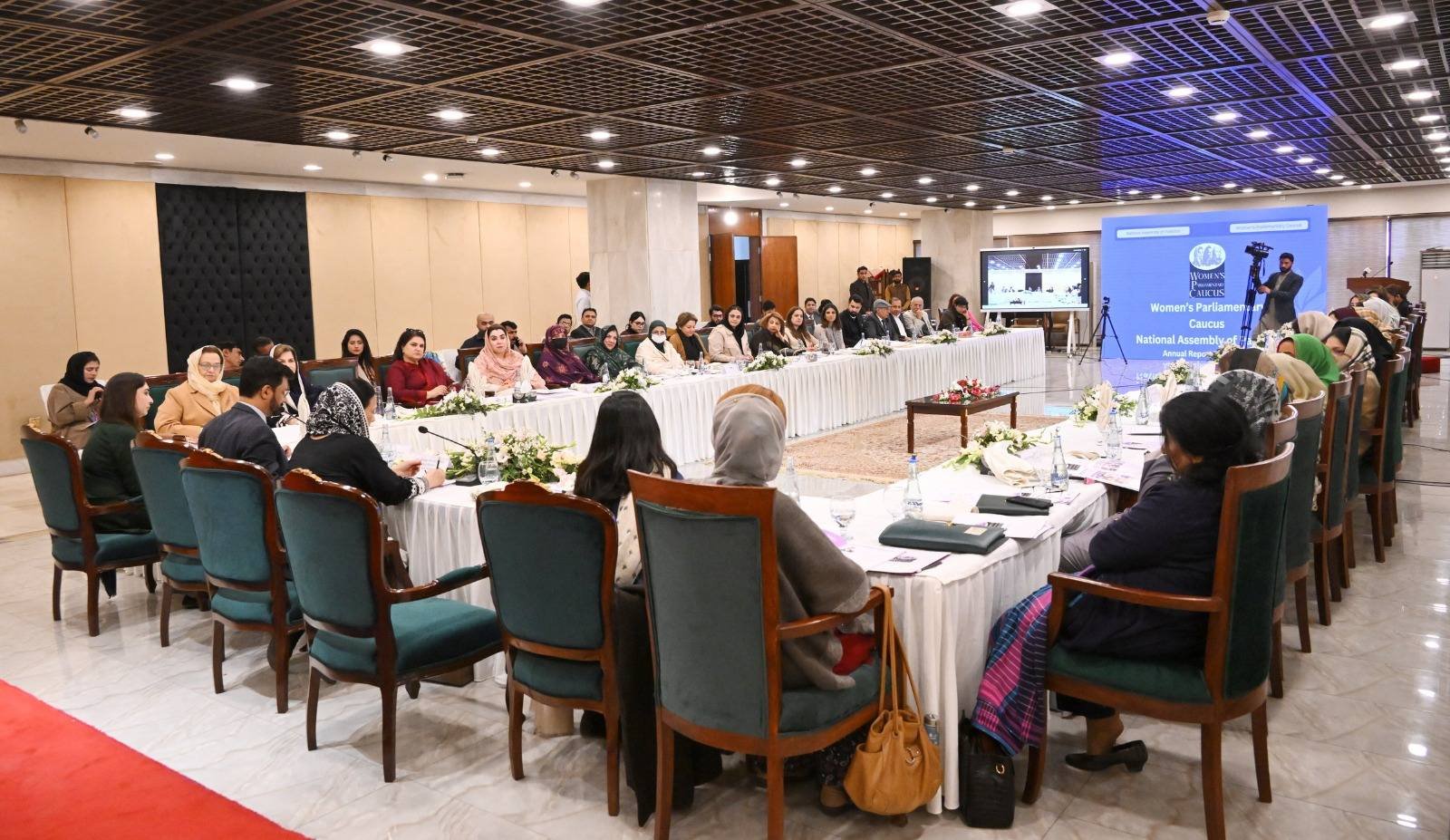
ISLAMABAD (DR HINA ZAFAR) The Women’s Parliamentary Caucus (WPC) has officially launched its Annual Report 2024–2025 at Parliament House, Islamabad, marking a key milestone in advancing women’s rights, gender equality, and female parliamentary participation. The event, led by MNA Syeda Shahida Rehmani and supported by UN Women, brought together parliamentarians, former women legislators, development partners, diplomats, civil society, legal experts, and media. Attendees reaffirmed their commitment to protecting women’s rights, promoting gender-sensitive laws and budgeting, and strengthening WPC’s provincial and legislative presence. The report details WPC’s achievements, legislative progress, engagements, and challenges over the past year.
Undoubtedly, the Women Parliamentary Caucus (WPC) of Pakistan has, over the years, emerged as one of the most consequential yet understated institutional mechanisms within the parliamentary system. The Annual Report 2024–25 provides concrete evidence that the WPC is no longer a symbolic forum but a policy-influencing, capacity-building, and nationally networked institution contributing meaningfully to democratic governance and gender equality. A critical analysis grounded in documented achievements demonstrates that the WPC’s impact is both structural and strategic.
Institutional Maturity and Strategic Direction
Established in 2008 through a National Assembly resolution, the WPC has steadily evolved into a cross-party institutional platform uniting women parliamentarians from both treasury and opposition benches. According to the Annual Report 2024–25, the Caucus operated under a clear strategic vision led by its Working Council, convening nine General Assembly meetings and multiple Working Council sessions during the year. These meetings addressed substantive policy areas such as cybercrime against women, inheritance rights, population growth, and gender-based violence, underscoring the Caucus’s role as a forum for informed parliamentary discourse rather than rhetorical advocacy.
The leadership of the WPC, particularly under Secretary Dr. Shahida Rehmani (MNA), reflects a shift toward institutional consolidation, strategic planning, and measurable outcomes—an essential marker of democratic maturity.
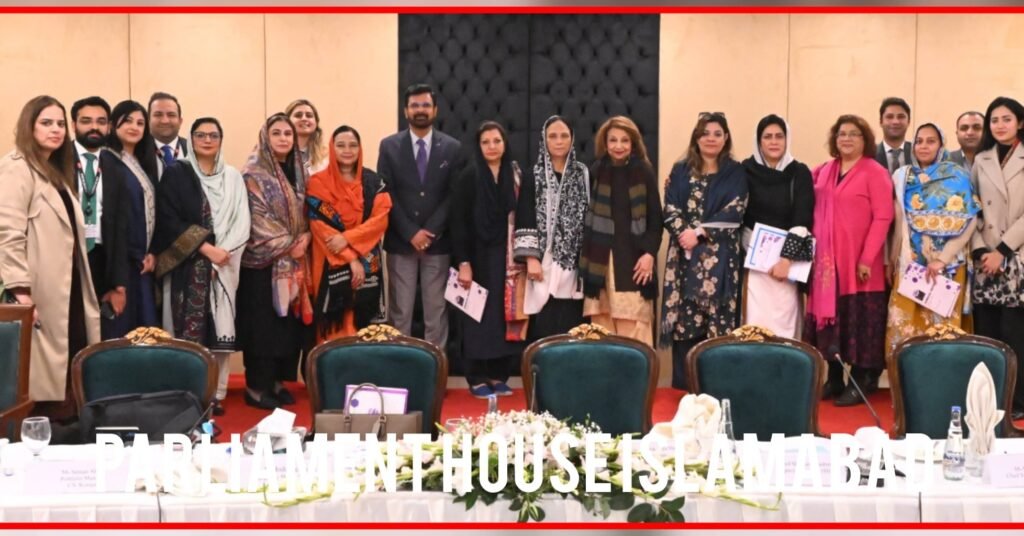
WPC Annual Report Launch Ceremony 2025 Group Photo at Parliament House Islamabad